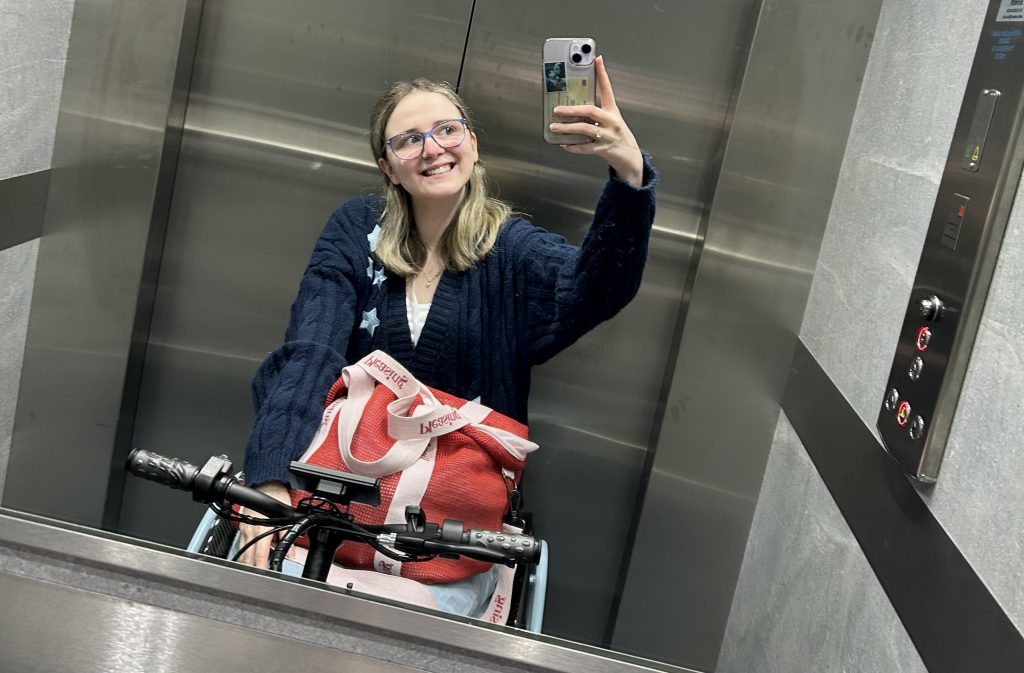
Hi! My name is Caitlin, and I’m a second-year Creative Writing student. I’ve been living with multiple chronic illnesses for over five years now, and I’m here to share what I wish I had known before I started university myself!
1. It’s not impossible
Of course, everyone’s chronic illness is different, and everyone has different capacities. But, only you know what you’re capable of. If you feel that university is something that you can handle alongside your disabilities, then don’t let anyone tell you that it’s not possible.
I went to sixth form and started taking three A-Levels. This quickly proved to be too much for me to manage and I flared up badly. This led to me making the difficult decision to drop down to two. This decision was made even harder by teachers and mainstream information available online telling me that this would mean I wouldn’t get into university.
I worked hard, I created work that I was proud of and got grades that got me three unconditional offers to different universities (and no, it wasn’t the double A* that I was told was the only way to get enough UCAS points!)
Grades aren’t the only thing that matter, and your application can reflect this.
2. Request the reasonable adjustments
Universities are well equipped and often have dedicated disability service teams that can support you through your studies. They can offer a wide range of adjustments and support, and it can be difficult to know what they can help with. My biggest recommendation is to ask! They might surprise you with what they can offer.
For me, this support has included timetable adjustments (making sure that I don’t have multiple classes in a day due to energy levels), making sure that the lecture halls and classrooms selected are wheelchair accessible, arrangements for exams and assignments, making my lecturers aware of my conditions and support I might need, allowing me to record lectures and having them available online, and arranging personal fire evacuation plans for on campus and accommodation.
3. Apply for DSA
DSA is a UK government grant that you can apply for when you have a disability, long term health or mental health condition, or a learning difficulty, to help with additional study related costs. DSA doesn’t have to be paid back and isn’t means tested.
I recommend applying as soon as possible to make sure that the support is in place when you start uni, as sometimes it can take a while.
DSA provided me with equipment and software so that I can record lectures and revisit things easier on days that I’m struggling, a reduction on the cost of a laptop, and ergonomic study equipment including a mouse, keyboard, and chair/leg rest to reduce pain.
They can also help with travel costs if you live off campus, which can be a massive help when accessible travel can be difficult and get costly.
4. Accommodation adaptations and accessible flats
Apply for accessible accommodation if you need it, and ask for adaptations. I had no idea before looking into universities that they could offer so much more than just wheelchair accessibility! Ask what they can provide and see what will help you.
Some things that helped me the most included:
- Having an accessible room that was bigger, allowing more space for me in my wheelchair. This also included an accessible wet room en-suite, with a shower chair (this helps massively with my PoTS), grab rails, and a lowered sink so that I can sit while using it.
- An adjustable bed which can move up and down, as well as the mattress.
- A small fridge and freezer in my room for medication and additional meals ready for flare ups and due to me being unable to go shopping often/on my own.
- A fire evacuation plan.
5. Consider telling people about your conditions.
It can be difficult to tell people about your chronic illness, especially right after meeting them. Personally, in my first year I worried about what to say and what people would think, or if they would understand.
Now I understand that telling people, (especially if they are the right people) means that they can support you. I found that when I opened up to one of my friends more about my conditions, I became a lot more comfortable around her, particularly where she was so supportive, and we became much closer.
I really recommend it, and that doesn’t just go for friends but also flatmates, lecturers, and other members of staff that may be able to provide support!
6. Prepare for flares
Unfortunately, with chronic illnesses, flares often come around regardless of trying to avoid them, especially when you’re busy and adjusting to a new routine. These can be made more manageable by planning ahead.
Try to keep everything that you might need in a flare up in your room, so that it’s ready and saves you moving around as much. For me, this meant keeping a cart by my bed with all of my medications and medical equipment, and keeping food and spare bottles of water in my room too. I also recommend cooking extra portions and freezing some for easy meals when you’re flaring.
7. Freshers’ week, socialising, and guilt
Freshers’ week can be super overwhelming, especially for someone with a chronic illness. There’s so much to do, from unpacking and meeting new people, to activities and parties. But, Freshers’ week isn’t the only time to make friends and go to events. It’s important to remember that it’s not worth a flare up to push yourself through, and it’s okay if you can’t do it all!
This also applies to your studies, cooking and just general living. If all you can manage is working from bed one day, that’s okay! Or if you need to throw a frozen ‘unhealthy’ meal in the oven because that’s all you have the energy for.
If you feel behind, just remember you are managing something HUGE alongside uni life, and that’s something to feel unbelievably proud of.
8. REST
Last, but certainly not least, rest. It’s so important to make sure you take time to rest and make sure you don’t over-do it.
Resting as much as you can will leave more energy at other times for your studies and the fun things, and lead to less flare ups which will mean missing less things in the long run. It can be hard to find a balance, but once you figure it out, it will make life much easier.
Thanks for reading! Follow my social media for more chronic illness related content, and consider subscribing to my blog for updates when I post! 🙂
Instagram: @written.by.caitlin
TikTok: @writtenbycaitlin



Leave a comment